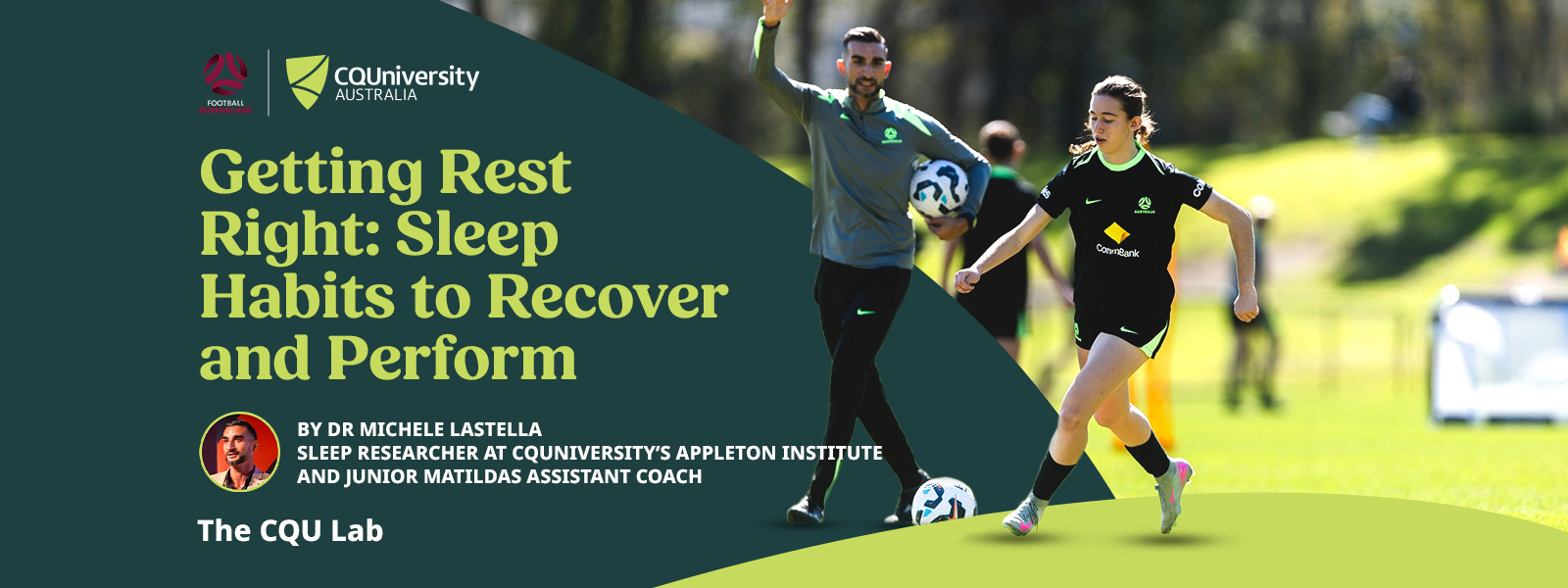
By Dr Michele Lastella
Sleep researcher at CQUniversity’s Appleton Institute, Junior Matildas assistant coach
The amount and quality of sleep you get depends on your sleep habits. No different from football, where good habits = good performances, bad habits = poor performances. So good sleep habits = good sleep, bad sleep habits = bad sleep.
It can take some effort and discipline to develop and maintain good sleep habits, but the benefits are well worth it.
The purpose of sleep
Sleep is an important component in the preparation for, and recovery from, strenuous exercise. Obtaining sufficient sleep can help reaction time, coordination, concentration, memory, motivation, and mood – all of which are important for footballers, and even coaches. Sleep also helps repair and build your muscles.
How much do I need?
Most athletes need 8-10 hours of sleep each day to function effectively. Our research indicates that athletes are in a sleep deficit when they regularly obtain less sleep than they need to feel refreshed upon wakening. Typically, feeling refreshed requires more than 8 hours per night. This becomes even more important for athletes who undertake high levels of strenuous exercise.
How do I get good sleep?
Bedroom. Your bedroom must be a sleep haven – keep it dark, quiet, and at a good temperature (19-21ºC is best), and make sure you have a comfortable mattress and pillow/s.
Routine. A similar routine each night can help your body to prepare for sleep. Your routine should start about 60 minutes before bedtime. For example: (i) turn off TV, smart devices and bright lights, (ii) check diary for next day’s schedule and jot down any thoughts, (iii) have a shower, go to toilet, clean teeth, (iv) set alarm and get into bed, (v) turn off all lights.
While it may seem simple, sleep science shows the effectiveness… and a good sleep routine can travel with you anywhere! (If you’re travelling to compete, timing your usual routine to fit with a new time zone is also an effective way to reduce the impacts of jetlag.)
Technology. When you’re in bed, avoid watching TV, doing homework, and even using your smart devices (including smart phones) – it can steal sleep time and form bad habits. Screens can also act as a stimulant and have alerting effects. Typically around 10pm our brains start to secrete melatonin, our main sleep hormone that makes us feel sleepy. Some evidence indicates that blue light exposure (such as those emitted from our smart devices) negatively impact the release of melatonin, and therefore, may delay the time it takes us to fall asleep.
Calm mind. Mindful breathing or meditation can clear thoughts and promote sleep. Instead of lying awake counting sheep, counting blessings in a gratitude practice can also help end the day in a calm state.
Diet. Choosing the right foods can promote sleepiness at bedtime and alertness during the day. To promote sleepiness, eat foods with a high glycaemic index (GI) (e.g. white rice, pasta, bread, potatoes, carrots, Cornflakes, Sultana Bran). For alertness, eat foods that are high in protein (e.g. meat, eggs, fish, beans). These effects of food usually occur over 2-4 hours.
Avoid eating during the night because your digestive system usually shuts down while you are asleep. If you must eat, have a small snack (e.g. walnuts, almonds, cereal, toast, or milk) and avoid foods that are high in fat.
Avoid drinking excessively before bed or during the night, as needing the toilet can also disrupt your sleep. If you must drink, restrict amounts to minimise toilet breaks. Drinks like tart cherry juice, a glass of milk, and even banana tea (steeping a banana and its peel in boiling water) have been shown to promote good sleep.
Caffeine. Avoid coffee and other caffeinated beverages in the 5-6 hours before going to bed. Younger athletes (under 16 years of age) should avoid consuming any caffeine.
What if I am struggling to fall asleep?
The average time from getting into bed to falling asleep is 20 – 30 minutes. But it can take a lot longer, particularly if you start to feel anxious about being awake.
If you can relax, stay in bed and you will soon fall asleep. If your body continues to feel alert, then do something else for 10 – 15 minutes to distract yourself.
Reading is good – a textbook, not something exciting. Anything that increases your heart rate or body temperature is bad (e.g. exercise or housework). Don’t start watching TV or using your phone or PC. Watching the clock can increase your anxiety – try turning it around or taking it out of your bedroom altogether.
Sleeping tablets can only deal with sleep problems in the short term, and should only be used on advice from a doctor. Younger athletes (under 16 years of age) should not be taking any sort of sleep tablet. Even natural sleeping supplements, like melatonin, can have side effects.
Is napping a good idea?
In short, YES. If short, YES. A short nap can improve alertness and performance during the day, especially if night-time sleep has been restricted or interrupted. If you do nap, restrict the nap to about 1 hour with an alarm – if you nap too long, it will interfere with your main sleep later. You may feel groggy after a nap, so give yourself at least 30 minutes after waking before you start training. (See figure for a practical guide for when to nap and not to nap.)
Appleton Institute is CQUniversity’s Adelaide-based flagship research centre for behavioural sciences across physical activity, sleep and biological rhythms, and operational readiness. The research team regularly provides sleep, performance and recovery advice to athletes, including via the Australian Institute of Sport’s REST Hub.
If you found this article valuable and would like to learn more or discuss these insights, please contact CQUniversity via cqu.edu.au/about-us/contacts.
If you’re interested in studying at CQUniversity, explore your options at cqu.edu.au